
Arrest History in Kimble County
A Kimble County arrest can begin with the Sheriff, Junction Police Department, a Texas Department of Public Safety trooper, the elected constable, or another state or federal officer with arrest power. The creating agency holds the incident or arrest narrative. If the person enters the Kimble County Jail, jail staff create a separate booking event with intake details, booked charges, bond data, and custody status.
The record can split again after intake. The County/District Clerk receives a case only when a prosecutor files a charge. Reportable Class B misdemeanor and more serious fingerprint events can flow to the Texas DPS Computerized Criminal History system, followed later by prosecution and disposition reports. A booking entry alone does not show whether the prosecutor declined, changed, dismissed, or proved a charge.
Geography matters in this rural county. An event inside Junction may involve city police, while the Sheriff works across county jurisdiction and DPS troopers patrol major highway routes. Read the arresting-agency field before sending a request. The Kimble County Jail may hold the booking even when another office owns the narrative report.
Find Kimble Bookings Without a Roster
Kimble County does not publish an official web booking log, current inmate roster, warrant search, or sheriff mobile app. The official fallback starts with the Sheriff and Jail at 415 Pecan Street. Call (325) 446-2766 for same-day custody and booking identification. Then use VINELink, which the Sheriff links, for available custody status and change notifications.
VINELink is not a complete Kimble County arrest file. It does not replace the agency narrative, jail jacket, or filed court docket. An absent result also does not prove that no arrest occurred. The person may have been released, transferred, booked outside the county, or not yet visible in the service.
How to Look Up Kimble County Arrests
A complete Kimble County arrest search moves from the fastest custody source to the record that answers the reader's question. Gather the approximate event date, location, arresting agency, name, and any report, booking, warrant, or cause number. Use only enough personal detail to distinguish the event.
- Identify the arresting agency and approximate time from the citation, release paper, witness information, or known location.
- Call the Kimble County Jail at (325) 446-2766 for present local custody and a booking identifier, then check VINELink for available status or notifications.
- Request the arrest narrative from the agency that created it. Sheriff records go to the Sheriff; Junction police records follow the city's public-information route.
- Search the County/District Clerk portals after charges have had time to be filed, then use the Kimble County criminal court case record for the filed charge and outcome.
- Use the Texas DPS Criminal History Search for statewide public conviction and deferred-adjudication information, not as proof of a same-day arrest.
- Submit a narrow written request to the proper agency when the phone, custody, and court routes do not provide the needed record.
- Check TDCJ only after a state-prison transfer, or the federal Bureau of Prisons when the custody is federal.
This sequence prevents a common mismatch. A custody service answers where someone is now, the arresting agency explains the event, the jail identifies a booking, the court records the filed prosecution, and DPS supplies its authorized statewide product. Choose the Kimble County arrest channel based on the fact needed rather than expecting one result to answer all five questions.
Request a Kimble Arrest Narrative
The Sheriff does not publish a separate records-division portal, request form, fixed copy fee, or promised response time. A written request creates a clear record of its scope. Name the exact item, such as an incident report, arrest report, booking entry, jail log, warrant information, CAD or 911 record, or body-camera recording. Add the event date, location, agency, known record number, delivery format, and a cost ceiling.
Kimble County Sheriff and Jail
415 Pecan Street
Junction, TX 76849
(325) 446-2766
Fax: (325) 446-4341
matt.suttle@co.kimble.tx.us
The official Sheriff page supplies the contact route and VINELink referral. Ask whether email, fax, mail, or hand delivery is preferred because no dedicated public-information address is posted. A Junction Police event should instead go through the City of Junction records channel, while a trooper-created report follows the relevant DPS or crash-record process.
Texas Public Information Act requests do not require a special phrase, but a narrow written description helps the custodian locate responsive records and identify any redactions. Ask for an estimate before charges exceed a stated limit. The research found no official Kimble sheriff copy fee, notarization rule, or fixed turnaround, so those details should be confirmed directly rather than assumed from another county.
Note: Active investigations, juvenile material, victim details, and protected identifiers may be withheld or redacted under Texas law.
What an Arrest Record Shows
The exact public field set for Kimble County bookings was not available for inspection. Request fields based on the event rather than assuming each will be released. The arrest narrative and booking record can be held by different offices, and a court cause number may not exist if no charge was filed.
| Incident or report number | Identifies the creating agency's enforcement record. |
|---|---|
| Arrest date, time, and place | Locates the custody event and distinguishes similar incidents. |
| Arresting agency | Shows which office should receive a narrative request. |
| Booking number and time | Connects the arrest to Kimble County Jail intake when booked locally. |
| Alleged charge or warrant | States the booked basis, which may differ from a later filed charge. |
| Magistrate and bond | Can identify warning, bond amount or type, holds, and release conditions. |
| Release or transfer | Marks the reported method or date when available. |
| Linked court cause | Connects the custody event to a prosecution if one was filed. |
| Booking photograph | No official Kimble policy promised public online release; confirm with the custodian. |
Some fields may be absent because they do not exist, were never provided to that custodian, or are legally protected. Ask whether a missing item is held by the arresting agency, jail, clerk, or DPS. That distinction is more useful than assuming the entire Kimble County arrest record is withheld.
Kimble Arrests and Magistration
Booking typically includes identity intake, property inventory, fingerprints, a photograph, charge or warrant entry, medical and safety screening, classification, and a later release or transfer. The Sheriff's official page also announces magistrate court each morning at 9:00 a.m. Central. Magistration supplies legal warnings and addresses probable cause and bond issues. Texas Code of Criminal Procedure article 15.17 generally requires prompt presentation, commonly no later than 48 hours after arrest.
Local flow: Arrest → Jail Intake → Magistration → Prosecutor Review → Filed Case or No Filing → Release, Transfer, or Court Disposition
This timeline explains why a same-day booking charge may not match the later court file. The arresting officer records the alleged basis for custody. A prosecutor then decides what charge, if any, should enter court. The magistrate step is not a conviction and does not settle the final outcome.
Recent Arrests and Booking Logs
No official Kimble County online booking log was found. Do not substitute a commercial jail directory or mugshot gallery. For recent custody, call the Sheriff and use VINELink. For a historic booking, request the booking entry from the Sheriff or jail. For the filed prosecution, search the clerk's three official portals after enough time has passed for court reporting.
A current-custody tool has a narrow job. Names can disappear after release or transfer, and a custody status does not show the full arrest narrative or legal result. Conversely, a court docket can remain after custody ends. Matching the agency, booking date, and cause number is more reliable than expecting one tool to provide the complete Kimble County arrest history.
The county links iDocket as one route to a filed court case after an arrest.

That docket route can show what charge reached court, but it does not confirm present jail custody or supply the original arrest narrative.
The county also links the Tyler UCMS Public Portal for criminal case searches.
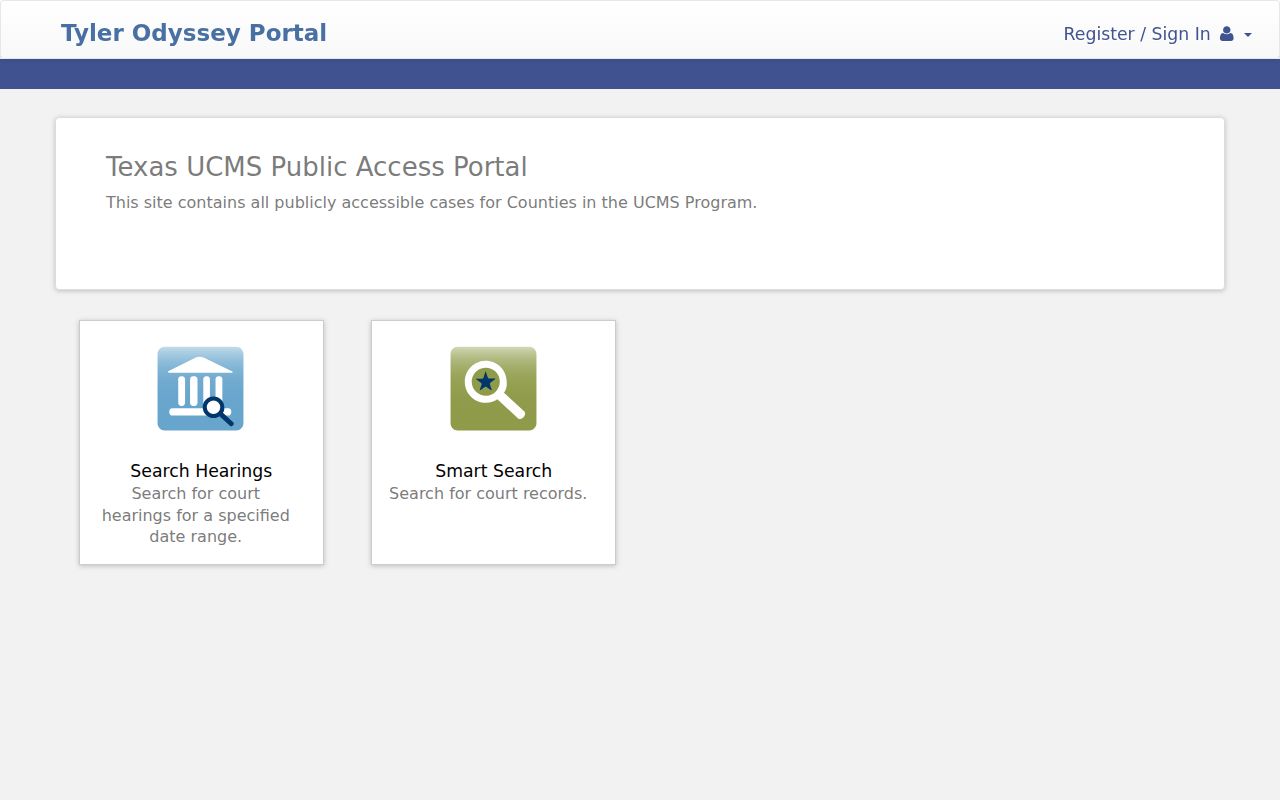
Tyler can provide another view of a filed case, while booking confirmation still belongs with the Kimble County Jail.
For older records, give the Sheriff a useful date range and identify whether the request concerns an arrest report or jail booking. Those are not interchangeable. If the goal is the result of a charge, move to the clerk's case file. If the goal is present state-prison custody after sentencing, use TDCJ Inmate Search instead of the county jail route.
Kimble County Arrest Numbers in Context
Official monthly reports show workload, not guilt or an annual crime rate. In February 2025, the Sheriff reported 10 arrests, while the jail reported 20 bookings and three out-of-town transports. April brought 13 arrests, 24 bookings, and 26 releases. May listed 16 arrests, 24 bookings, and 25 releases. August listed 21 arrests, including 15 felony and six misdemeanor arrests, plus 21 bookings and 22 releases.
Those totals need careful reading. One person can have more than one charge. A booking can stem from another agency's arrest, and a transfer is not a new offense. Arrest counts and booking counts therefore need not match. The reports also distinguish warrants entered from warrants confirmed, showing why an agency system event is not the same as a public list of active warrants.
Note: These figures cover one official monthly snapshot and must not be treated as annual totals or unique-person counts.
From Kimble Arrest to DPS Record
For a Class B misdemeanor or more serious event, the arrest data and fingerprints can be reported to the Texas DPS Computerized Criminal History system. Later reports add prosecutorial action and the court disposition. Reporting lag or a missing disposition can leave the cycle incomplete. A local booking also remains distinct even if a court charge is dismissed.
The DPS search instructions explain public name-search scope, matching, and search credits.

The public product returns conviction and deferred-adjudication information authorized for release. It is not a complete list of local Kimble County bookings, and name matching is not positive identification.
The Texas DPS criminal-history FAQ provides the official route for scope, personal review, fees, and correction.
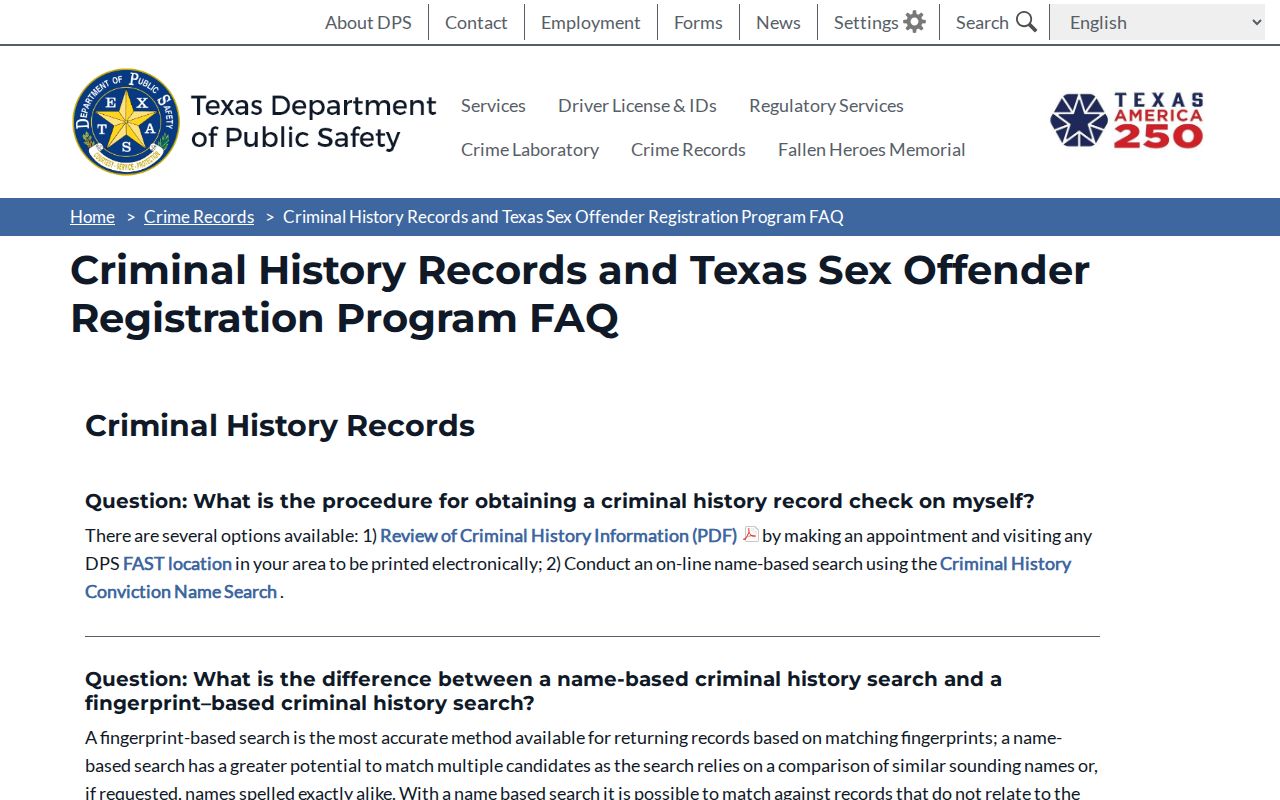
For review of one's own fuller repository record, DPS directs people to a fingerprint-based personal review through FAST and IdentoGO. Fingerprints are the reliable identity match.
Arrests vs Convictions
A Kimble County arrest record proves that an agency recorded a custody event. A conviction record proves that a court entered a judgment of guilt after a plea or trial. They are created at different stages and held by different custodians. A dismissal, acquittal, no-bill, or decision not to file can end the prosecution without turning the arrest into a conviction.
| Point | Arrest record | Conviction record |
|---|---|---|
| Creator | Arresting agency and jail | Court and clerk |
| Meaning | An arrest or booking was recorded | A judgment of guilt was entered |
| Local source | Sheriff, jail, Junction PD, or other arresting agency | County/District Clerk or fine-only court |
| Possible ending | Release, transfer, or later case filing | Sentence, appeal, or qualifying restricted access |
| State layer | Reportable fingerprint arrest cycle | Reported conviction or deferred disposition |
Note: An arrest is not proof of guilt, and many bookings never produce a filed charge or end without a conviction.
Texas expunction under Chapter 55A can remove qualifying arrest and case records through a court order. Dismissal alone does not automatically erase the jail booking or DPS cycle. Anyone reviewing their own record should obtain the court disposition, confirm each system separately, and use the official correction or expunction route when the facts support it.