
How to Check Criminal History in Junction
A Junction search begins with the kind of event. The Junction Police Department holds the report it created. Junction Municipal Court holds its citations, ordinance files, and fine-only Class C matters. The Kimble County Jail holds local booking information, and the County/District Clerk holds filed Class A or B misdemeanor and felony cases. No verified city arrest blotter, police report portal, mobile app, or municipal case-search database was found.
- Read the citation, report number, or booking entry and identify the Junction agency that created it.
- Ask Junction Police or City Hall for the incident or arrest report, using a narrow written request.
- Contact Junction Municipal Court when the matter is an ordinance violation, traffic citation, or fine-only Class C case.
- Call the Kimble County Jail and search county court channels if the event led to custody or a higher-level filed charge.
- Use Texas DPS only for its statewide public conviction and deferred-adjudication product, not as a substitute for a current city file.
Work from newest to oldest when time matters. The creating agency is the best first stop for a fresh event. The court becomes more useful after a charge is filed, and a certified disposition is the strongest local proof of the outcome. A statewide name result is a separate product with narrower public scope.
Read the Junction Record Agency
Junction sits where the North and South Llano Rivers meet and where major highway routes cross a wide rural county. An event near the city can involve Junction Police, the Kimble County Sheriff, or a Texas DPS trooper. The agency field prevents a request from going to the wrong office. A city report number should go to Junction Police. A sheriff number belongs at 415 Pecan Street. A state crash report can follow the TxDOT crash-record route instead of the city incident-report process.
The arresting agency writes the event narrative. The jail writes the booking file. The court writes the case outcome. Those records can describe the same event without being duplicates, so a request should name the exact record needed.
The Junction Police Department
The official Junction Police Department page identifies Chief Rudy Supak, lists (325) 446-4900, and describes 24-hour protection by four full-time officers plus six reserve or part-time officers. A current DPS NIBRS roster identifies the department as ORI TX1340100 and lists (325) 446-2913. Neither number is labeled as a dedicated records desk, so callers should ask for records routing rather than assume one line is the copy counter.
Junction Police creates city incident and arrest reports. Official research found no dedicated report portal, posted request form, crime map, app, blotter, or report-copy price. A person seeking a report should identify the event and ask the city which written delivery route is current. Do not infer a fee from a city budget account that merely shows police-report revenue.
The city’s published activity material can describe workload, but it is not a name-search tool. An April 2025 city-hosted update reported a December activity set of arrests, vehicle accidents, traffic citations, miscellaneous reports, and code cases. Those counts should not be read as convictions or as the number of unique people involved. The source record for one event remains the police report, citation, booking entry, or court file.
Junction Police Reporting Identity
The Texas DPS approved NIBRS agency roster gives Junction Police a stable reporting identity: ORI TX1340100. An ORI is an Originating Agency Identifier. It helps distinguish the city department from the sheriff and other Texas agencies when records flow into state reporting systems.
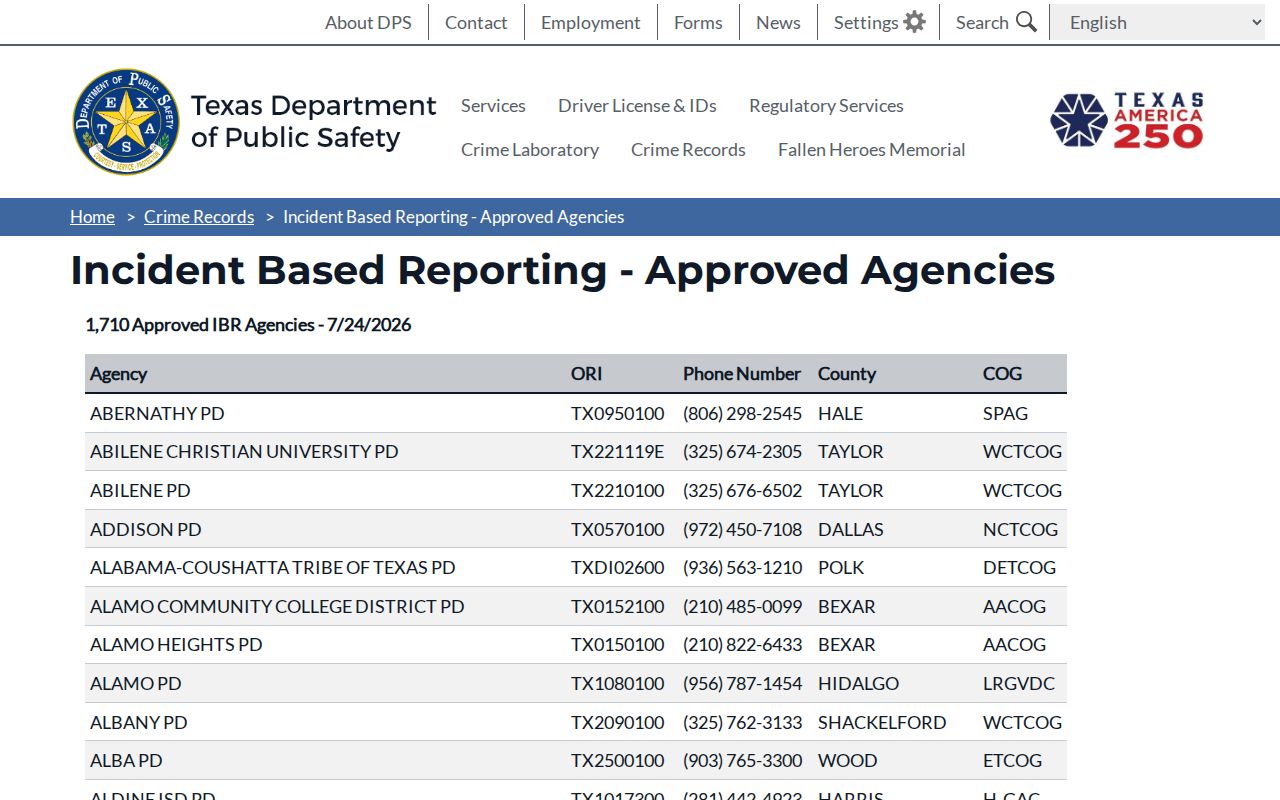
The roster supports agency identification, not a public Junction incident lookup. A person still needs the city request channel for the underlying police report and the right court for a filed case.
Arrests and Bookings in Junction
Junction Police can make an arrest inside city authority, but research found no separate city jail for continued custody. A person booked locally goes to the Kimble County Jail at 415 Pecan Street. The jail can confirm current custody by phone at (325) 446-2766, and the sheriff links VINELink for available status and notifications. Neither channel supplies the police narrative or proves that a prosecutor filed the booked allegation.
A Junction arrest may later appear in a county court file. Class A or B misdemeanors belong in the constitutional county-court system, while felonies proceed through the 452nd Judicial District. The broader Kimble County arrest history route explains the jail, VINELink, report request, and county filing sequence in full.
Junction Arrest Record Flow
After a Junction arrest, police create the incident or arrest report and jail staff create the booking event. A prosecutor then decides whether to file a charge. The filed case may differ from the booked allegation. It can be rejected, reduced, enhanced, or replaced, and a dismissal does not make the older police or booking record vanish by itself.
Local flow: Junction Police › Kimble County Jail › County or District Court › Texas DPS.
For a same-day custody question, call the jail. For the account of what police alleged, request the Junction report. For the final result, obtain the court disposition. The state repository is the later layer for reportable data.
Junction Municipal Court Records
Junction Municipal Court has exclusive original jurisdiction over city-ordinance violations and shares jurisdiction with the Justice Court over fine-only Class C state-law offenses committed inside city limits. It may issue search or arrest warrants in matters within its power. It does not try Class A or B misdemeanors or felonies. Those cases belong at the county or district level.
| Court Name | Junction Municipal Court, Judge Larry Harrison. |
|---|---|
| Case Types Heard | City ordinances, traffic matters, and fine-only Class C state-law offenses within city jurisdiction. |
| Case Lookup Channel | Contact the court clerk at 730 Main Street; no public Junction docket search was verified. |
| What the File Shows | Citation or complaint, settings, plea, orders, disposition, fine, costs, and warrant activity where public. |
| Copies and Fees | Ask the clerk for current copy options and price; no city schedule was verified. |
The court line is (325) 446-4473 and the email is court.clerk@cityofjunction.com. Sessions are listed Tuesday and Wednesday from 1:00 to 5:00 p.m.; clerk availability is Monday through Friday from 8:00 a.m. to 5:00 p.m. Confirm current hours before travel.
Ask for a cause or citation number when one is available. A name and approximate date can help, but they may not separate people with similar names. The clerk can explain the current copy route and whether a requested item is public. The clerk cannot turn a municipal citation into a county criminal case; jurisdiction follows the charge and the court that received it.
Junction Court Search Has Limits
The official Junction Municipal Court page is the honest city-level starting point because no public municipal docket search was posted. The former payment link redirects to a general provider interface. A payment page is not proof of complete case coverage, and the county’s iDocket, Tyler, and re:SearchTX links should not be described as guaranteed searches for Junction tickets.
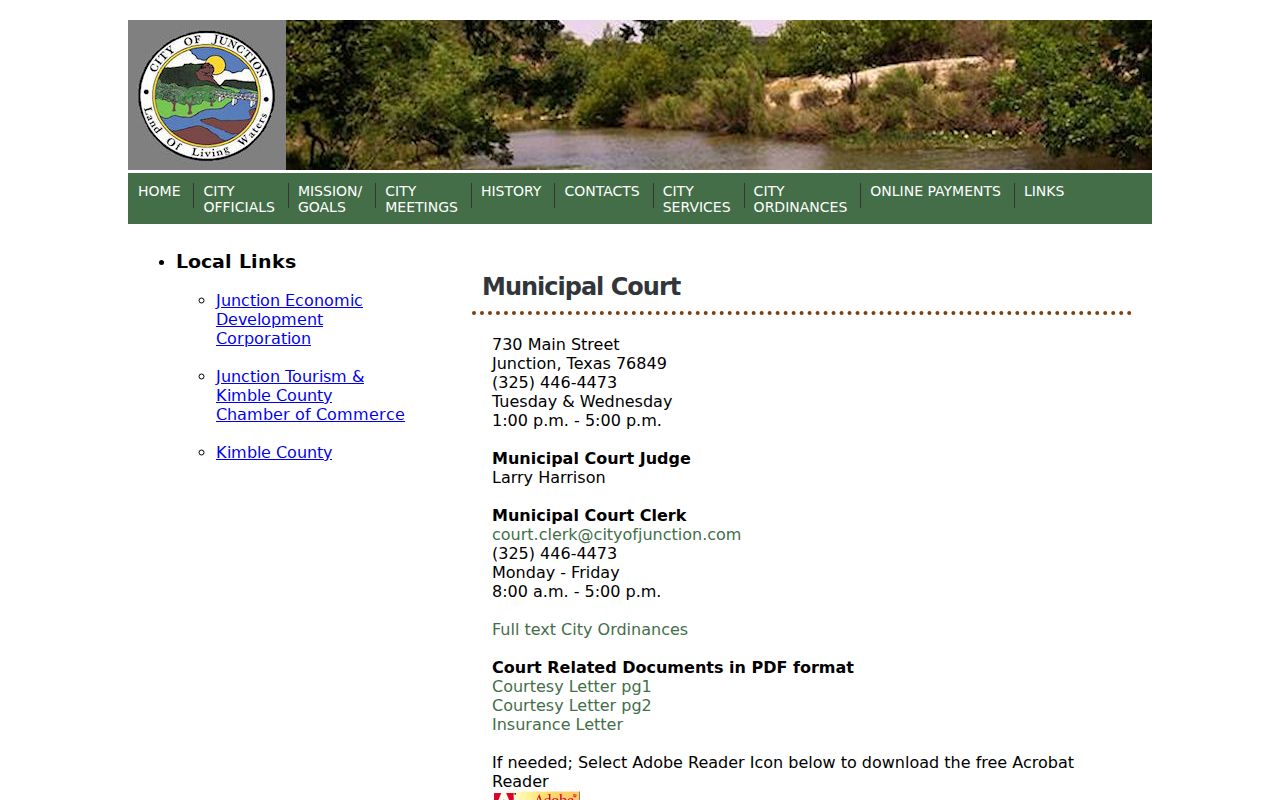
The city page gives the court contact, hours, forms, and payment route without promising an online docket. A no-result county portal search can therefore leave a live Junction municipal matter untouched.
Junction Citation Record Details
The municipal court publishes courtesy letters and a sworn insurance motion. That motion requests dismissal of a failure-to-provide-proof-of-financial-responsibility charge when coverage existed on the citation date. It shows how a small city case can depend on a filed document that is not visible through a public case-search screen.
The form asks for the State v. caption, defendant name, pending case, citation date, an attached insurance card or policy page, signatures, sworn date, and a clerk or notary jurat. It also provides Granted and Denied boxes, a judge signature, and initials beside a warning about a materially false sworn statement. These are form fields, not proof that any request will be granted.
Where Junction Records End Up
A fine-only Junction case can begin and end at Municipal Court. A more serious police allegation moves to a Kimble County prosecutor and, if filed, the county or district clerk. Reportable Class B or more serious arrest and disposition data can then reach the Texas Department of Public Safety Crime Records Division. Each transfer creates a delay and a different kind of record.
Record flow: Junction Police Department › Kimble County Courts › Texas Department of Public Safety.
That flow explains why a recent Junction report may exist before a court cause number appears. It also explains why a booking charge can differ from the final judgment. For a wider account of clerk portals and DPS records, use the Kimble County criminal history overview.
Request Junction Police Records
When the police page does not provide a report-copy portal, the city contact channel is the written-request fallback. The official Junction contacts page lists the route at 730 Main Street, Junction, TX 76849; (325) 446-2622; fax (325) 446-3003; and City Secretary Garvene Adams at garvene.adams@cityofjunction.com. Ask which route currently reaches police records.

The city warns that electronic communications are not guaranteed confidential. Include only identifiers needed to find the Junction record, and ask for a secure delivery method if the response may hold protected details.
| Request Field | Why It Helps |
|---|---|
| Requester contact | Lets the city send estimates and the response. |
| Incident, report, or citation number | Provides the fastest Junction agency or court match. |
| Event date, time, and location | Separates a city event from a sheriff or DPS event. |
| Exact record requested | Distinguishes a report, crash, CAD record, video, or municipal case. |
| Format and cost ceiling | Controls delivery and allows an estimate before added cost. |
A written request creates a clear record of scope and date. Texas law does not require special wording, but a narrow description helps city staff locate the right Junction file and identify any redactions. If Junction Police did not create the record, ask for the correct custodian instead of broadening the request to unrelated city departments.
The county restoration plan separately names Junction City Hall at 102 N. 5th Street as a possible commissioners-court meeting site. That temporary meeting reference is not the published police-records route. Confirm the destination before traveling so a city request does not go to a county meeting location.
Junction Records Share County Roots
The city-published history of Junction explains a long pattern of shared city and county justice space. Voters approved incorporation in 1927. The new city first lacked money and a municipal building, met at the county courthouse, and asked to house city-law violators in the county jail. A municipal building and fire station followed in 1939 and 1940, and the city replaced its marshal’s office with a police department in 1956.
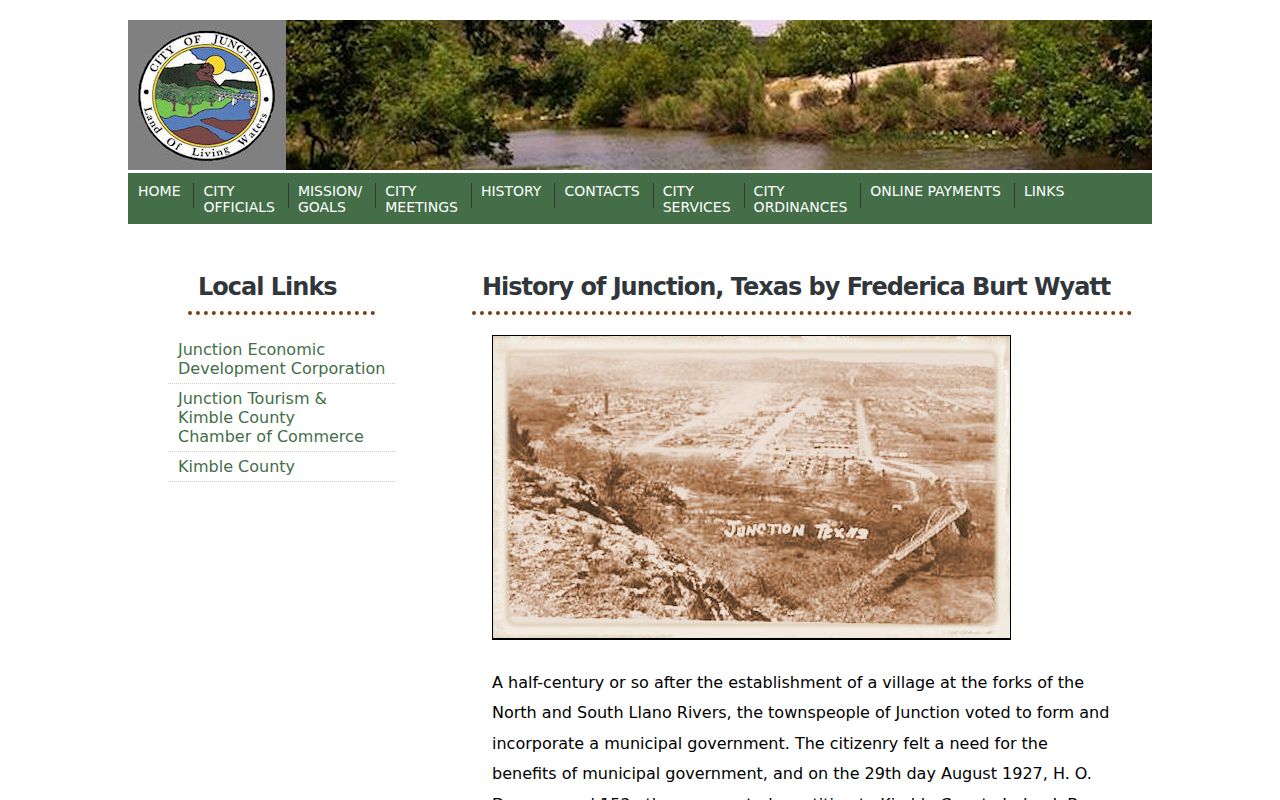
That history gives local context to the current flow from Junction Police to the Kimble County Jail and county courts. The institutions are separate custodians, even though the city and county have shared facilities and routes for generations.
Junction was first known as Denman and Denman City before the name settled on Junction in 1894. Interstate 10 later bypassed the community in the 1970s, and city limits expanded to include the corridor. That growth helps explain why the agency named on a modern highway record matters: city, county, and state officers can work close to one another while keeping separate files.
Public Access Rules
Junction Police records are governmental records, but a right to request does not make every field public. Active-law-enforcement material, juvenile information, victim-identifying data, protected personal identifiers, and records covered by an expunction or nondisclosure order can be withheld or redacted. Municipal court files follow court-access controls as well as the rules for the particular record.
Key Statutes:
Texas Government Code section 552.021 makes governmental public information available unless an exception applies.
Texas Government Code section 411.135 authorizes DPS to provide the defined public conviction and deferred-adjudication product.
Texas Code of Criminal Procedure Chapter 55A governs expunction of qualifying arrest and case records.
Send the request to the office that keeps the Junction record. The city handles its police reports, Municipal Court handles its fine-only cases, and the Kimble clerk handles filed county and district criminal cases.