
Running a Sex Offender Check in Kimble County
The official starting point is the Texas Public Sex Offender Registry. Texas DPS maintains that statewide file, while local authorities collect and verify registration data. Select Kimble County for a county-wide view, or use a name or location when the search needs to be narrower. The result is a public registry lead. It should be matched against several profile fields, not a name alone.
Use the National Sex Offender Public Website when the person or address may connect to another state. NSOPW sends a query across participating jurisdiction registries, so it adds geographic reach. It does not replace the Texas record for Texas-specific details. For suspected noncompliance in Kimble County, contact law enforcement. Emergency concerns belong with emergency services, not a registry search form.
Kimble County Registry Contact
The Kimble County Sheriff is the local registration authority for county jurisdiction. The office is at 415 Pecan Street in Junction and can be reached at (325) 446-2766. Official sources did not publish set registration hours, an appointment system, or a local fee. Call first before traveling. Staff can route a registration matter or a report of suspected noncompliance, but the public statewide search remains the right source for an ordinary Kimble County registry lookup.
Kimble County Sheriff
415 Pecan Street
Junction, TX 76849
(325) 446-2766
Registration hours and appointments were not published. Confirm them by phone.
Registration data moves from local verification into the DPS system. A recent change may take time to appear. A caller should describe the concern with a name, location, and observed facts, while avoiding claims that the public profile does not support.
The local office and the state search answer different questions. The search shows the public version of the statewide record. The sheriff can receive a report about conduct or a possible failure to comply, but staff may hold verification material that is not open on the public profile. Ask for the right function at the start of the call. That keeps a public-information question separate from a law-enforcement report.
Searching the Texas Public Sex Offender Registry
DPS provides name and geographic search modes. A location search can help when a name is unknown, while a county filter gives a broader Kimble County view. The interface may offer map and list displays. Live radius choices can change, so use only the distances shown on the current form.
- Open the official Texas registry and read its warning and conditions of use.
- Choose a name search or enter geographic details such as an address, city, ZIP code, or Kimble County.
- Review the list or map and compare more than one identifying field.
- Open the profile and read its registration, location, offense, and verification information in context.
| Field Label | Type | Required | Notes |
|---|---|---|---|
| Last Name | Text | Mode-dependent | Spelling affects a name search. |
| First Name | Text | Optional | Narrows possible name matches. |
| Address | Text | Geographic mode | Supports a street or proximity search. |
| City and ZIP | Text or select | Optional | Use the format accepted by the live form. |
| County | Dropdown | Optional | Select Kimble for county results. |
| Radius | Dropdown | Geographic mode | Available distances may change. |
| Map or List | View control | No | Changes how geographic results appear. |
If a county search is too broad, add a name or a narrower location. If it is too narrow, remove optional filters one at a time. Similar names and nearby map points still require a profile-level comparison before a Kimble County result is treated as a match.
Kimble County Registry Data Flow
The DPS registration program explanation describes the state and local roles behind a Kimble County registry record. Local officials handle registration and verification. DPS provides the public search and statewide program support. This division matters when a search result seems stale: a technical search issue belongs with the state portal, while a possible failure to register or verify belongs with local law enforcement.
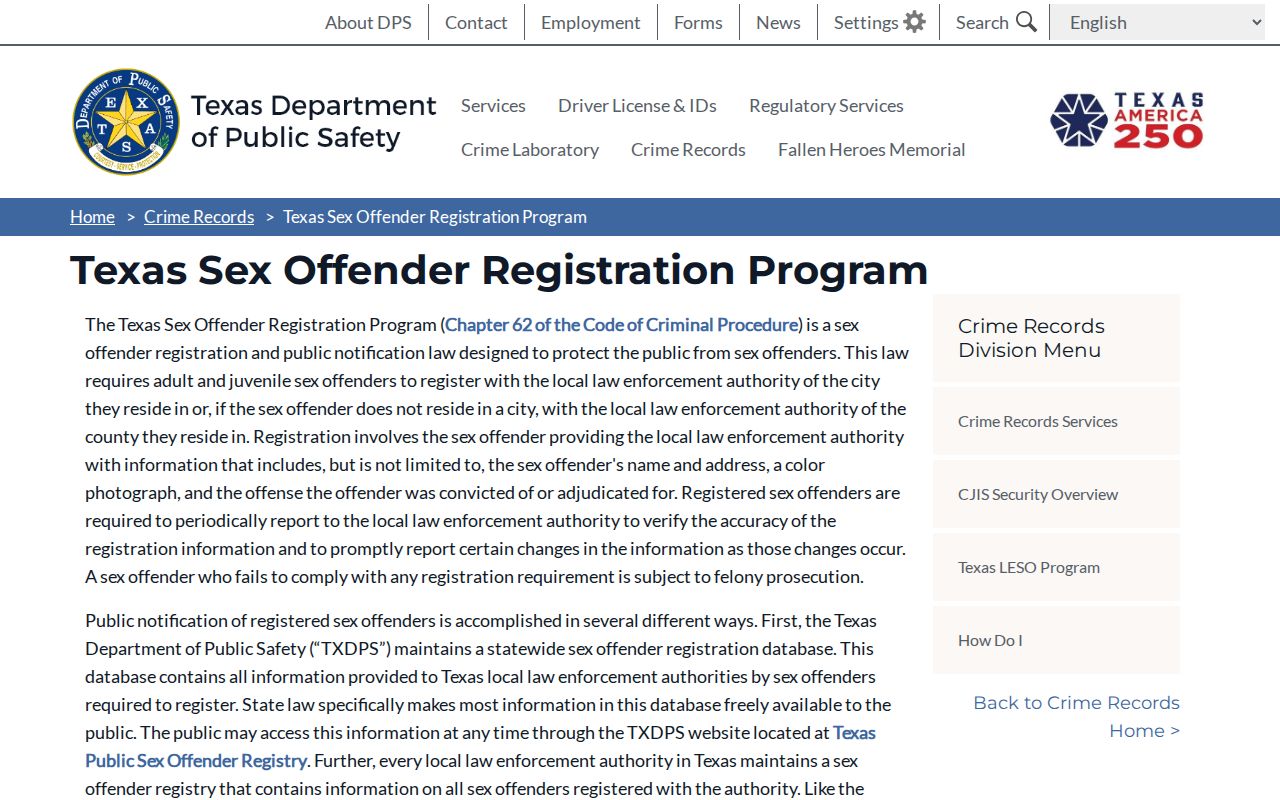
The official program page shows why a Kimble County sex offender check depends on both DPS publication and local registration work. Searchers should record the date they viewed a profile because status and location fields can change.
What a Registry Profile Shows
A Texas public profile joins descriptive, location, status, and offense fields. It may show a name and aliases, photo, physical description, address or described location, registration status, registering agency, offense information, conviction or adjudication date, victim age category, release information, school information, and qualifying vehicle data. Not every field appears in every record.
| Name and Aliases | Published identity names used to distinguish the registrant. |
|---|---|
| Photo and Description | Photo plus sex, race, age or birth data, height, weight, hair, and eye details when published. |
| Registered Location | An address or described location associated with the public registration record. |
| Offense Information | Offense description or statute and related conviction or adjudication data. |
| Status and Agency | Registration status and the agency tied to registration or verification. |
| Other Public Fields | Risk information if assigned, victim age category, institutional attendance, or qualifying vehicle details. |
DPS excludes Social Security numbers, driver-license numbers, phone numbers, online identifiers, employer details, victim-identifying information, and juvenile registration that a court ordered nonpublic. Those gaps are privacy rules, not proof that the Kimble County registry profile is incomplete.
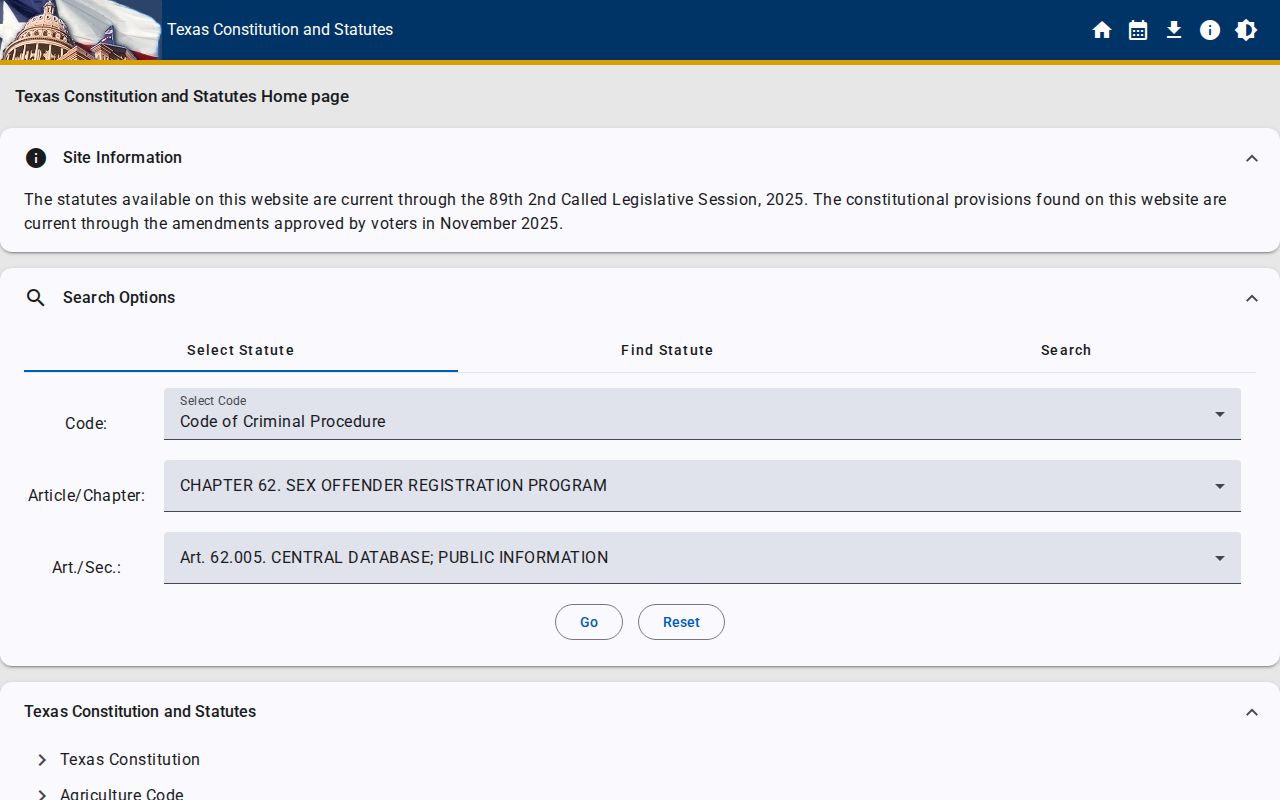
Registration Requirements and Levels in Texas
Texas does not reduce registration duration to a simple federal Tier I, II, and III chart. Duration is tied to the reportable offense and other statutory facts. Article 62.101 generally assigns lifetime registration to listed sexually violent and other enumerated offenses. Other qualifying adult reportable offenses commonly require ten years after discharge from supervision. Juvenile and other cases follow separate provisions and court orders.
| Texas Category | Duration | Verification and Visibility |
|---|---|---|
| Enumerated article 62.101 offenses | Lifetime | Frequency and notice depend on the statute and assigned status. |
| Other qualifying adult reportable offenses | Commonly ten years after discharge | Public status and verification follow Chapter 62. |
| Juvenile or other special cases | Subchapter I and court-order dependent | A court may affect duration or public visibility. |
The official Chapter 62 text supplies the controlling rules rather than a borrowed tier label. Offense names alone may not reveal every fact that controls duration.
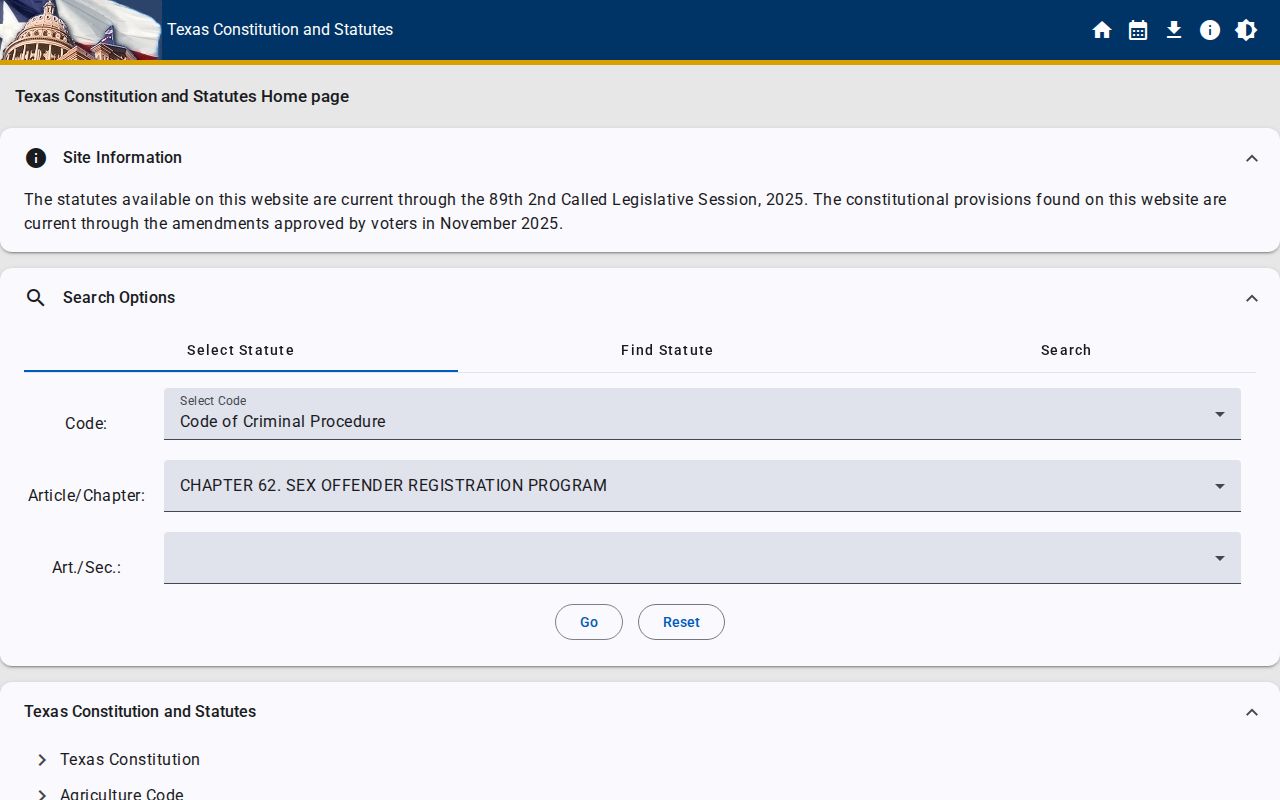
The statute view grounds the Kimble County registry categories in Texas law. Verification frequency and community notice can also turn on risk level or another status.
Kimble County Registry Cross-State Search
A Kimble County address search is strongest in the Texas registry. NSOPW adds a cross-state layer for moves, travel, or an uncertain jurisdiction. It searches participating public registries through one federal interface, but each source jurisdiction controls its own data. A result should therefore be opened at the source registry when more detail or a current status is needed.
The Department of Justice NSOPW search is the official national route documented for this project. It is useful when a county-only filter would be too narrow.
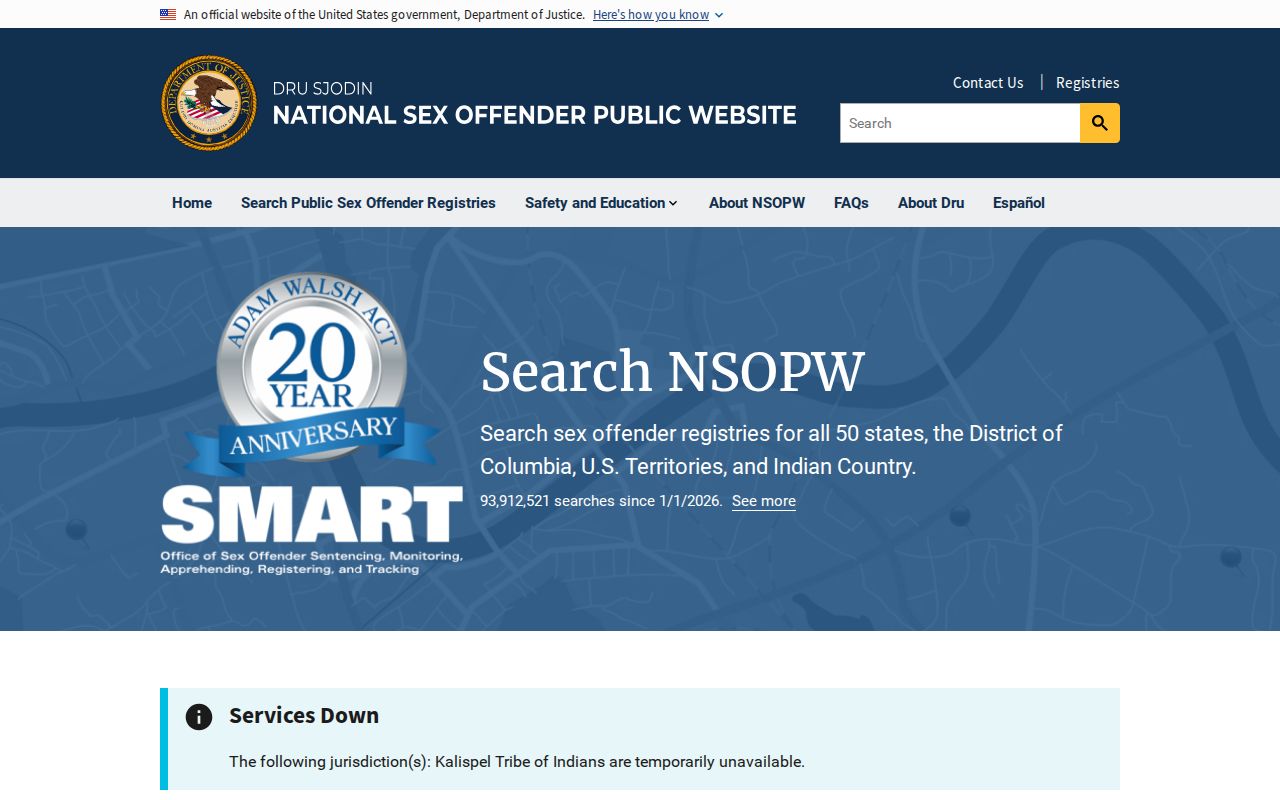
The national interface broadens the search, while the Texas profile remains the best source for Texas-specific registration fields. Similar names still require careful comparison.
Kimble County Registry Community Notice
Texas law allows DPS and local agencies to provide public notice. High-risk or civilly committed moves may lead to postcards, and a local authority may use meetings, newspaper notice, or a specialized site. The exact method depends on the registrant’s status and the governing law. No separate Kimble County email or proximity-alert signup was verified, so residents should not mistake a commercial alert for an official county program.
General-law cities may regulate child-safety zones within Local Government Code section 341.906. Research found no verified Kimble County or Junction distance ordinance. A map pin alone does not prove that a residence violates a local rule. Confirm the ordinance and the measured location before reporting a concern.
Community notice is not the same as a full history of every person at an address. Search results may reflect a described location, school information, or another status set by law. Read the profile labels closely. If an address seems wrong, do not contact the household. Pass the precise concern to the Kimble County Sheriff so the registering authority can check the nonpublic file.
Lawful Use and Community Notification
Registry information supports awareness and practical safety planning. It does not establish that a person is committing a new offense, and it does not authorize surveillance, threats, trespass, or public confrontation. Report a suspected registration violation to the Kimble County Sheriff or the law-enforcement agency with jurisdiction. Give specific facts and let officials test them against nonpublic verification records.
Misuse warning: Texas Code of Criminal Procedure Chapter 62 does not authorize harassment, threats, intimidation, or vigilantism. Misusing registry information for such conduct can be a crime under Texas law.
Read map results as leads. Match the record, note the source and view date, and use official channels when a fact needs to be confirmed.